
The impact of prolapse to canal ratio (PCR) in cauda equina syndrome outcomes and operative management
Published research co-authored by Mr Gordan Grahovac
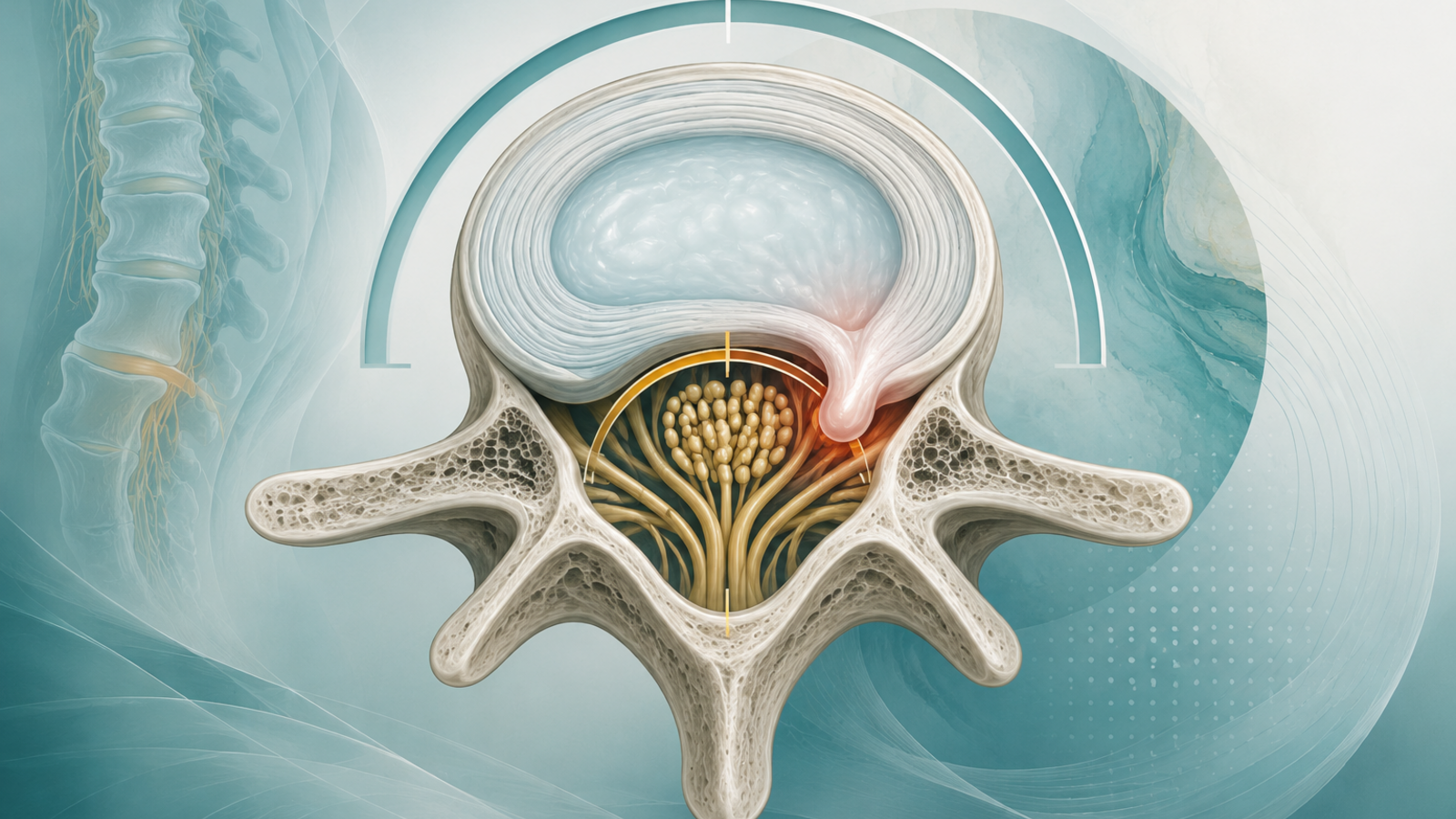
This paper considered whether the size of a disc prolapse relative to the spinal canal was linked with cauda equina syndrome outcomes. It is relevant because imaging measures may help clinicians understand severity and plan treatment, but they do not replace clinical assessment.
Research snapshot
Article title: The impact of prolapse to canal ratio (PCR) in cauda equina syndrome outcomes and operative management
Authors: Asfand Baig Mirza, Feras Fayez, Sami Rashed, Ammal Bibi Shahid, Chaitanya Sharma, Rishabh Suvarna, et al., Gordan Grahovac, Babak Arvin, Ahmed-Ramadan Sadek
Publication type: Journal article
Publication date: 2 April 2025
Publication details: European Spine Journal. 2025.
PMID: 40172650
PMCID:
DOI: 10.1007/s00586-025-08816-x
Study type: Retrospective cohort study
Mr Grahovac’s involvement: Listed author on the publication
Original publication: View the original publication on PubMed
What this paper looked at
This study focused on cauda equina syndrome caused by herniated lumbar discs. It evaluated prolapse to canal ratio, a radiological measure comparing disc prolapse size with the spinal canal, and considered its relationship with long-term outcomes and operative management.
Key points from the publication
The abstract describes a five-year retrospective cohort across two neurosurgical centres. Adult patients with cauda equina syndrome due to herniated lumbar discs were included, and treatment involved laminectomy and/or discectomy. Detailed full results should be checked in the publication before quoting further statistics.
Clinical relevance
The work is relevant to imaging interpretation, surgical planning and risk discussion in cauda equina syndrome. It may help clinicians consider how radiological compression relates to presentation and outcome.
What this means in context
Cauda equina syndrome remains a clinical and imaging diagnosis, and one measurement cannot determine treatment by itself. Decisions depend on symptoms, bladder and bowel function, neurological findings, MRI features, timing and specialist review.
View published abstract
The following abstract is reproduced from the original publication and is provided for reference. It may include technical terminology intended for clinical or academic audiences.
Purpose: This study aimed to evaluate the prolapse to canal ratio (PCR) and its long-term impact on outcomes in cauda equina syndrome (CES).
Methods: A 5-year retrospective cohort study was conducted across two neurosurgical centers, including adult patients diagnosed with CES due to herniated lumbar discs, treated with laminectomy and/or discectomy, with available radiological data and follow-up. PCR was calculated as the proportion of the disc prolapse cross-sectional area to the total spinal canal area. MRI scans were independently analyzed by two investigators, with random verification by a third. Patient demographics, symptoms, treatment, and follow-up data were also collected.
Results: Among 137 patients, cohorts were divided using a PCR cut-off of 0.5. Patients with PCR > 0.5 were significantly more likely to have persistent symptoms at follow-up (OR 3.93, CI 2.25-7.34, p < 0.0001). This risk increased with higher PCR thresholds (> 0.75 and > 0.8). PCR > 0.5 also predicted a greater likelihood of requiring a full laminectomy over minimally invasive approaches (OR 2.14, 95% CI 1.3-3.6, p < 0.005). Lower PCR (< 0.5) was associated with reduced complication rates and shorter hospital stays.
Conclusions: PCR is a valuable predictor of persistent pain and functional deficits following CES surgery and could be used to guide patient counseling before surgical intervention.
Keywords: Cauda equina syndrome; Discectomy; Lumbar disc herniation; Outcomes; Prolapse to canal ratio.
View the original publication on PubMed
About Mr Gordan Grahovac
Mr Gordan Grahovac is a Consultant Neurosurgeon and Complex Spinal Surgeon with expertise in managing complex spinal and neurosurgical conditions.
His work includes the assessment and treatment of patients with degenerative spinal conditions, spinal cord compression, spinal tumours, complex spinal pathology and conditions requiring specialist neurosurgical input.
His approach focuses on careful diagnosis, appropriate treatment planning and helping patients understand their options clearly.
Important note
This page is for educational purposes only and should not be taken as individual medical advice.
If you or someone you know has symptoms such as worsening headache, confusion, drowsiness, weakness, changes in speech, seizures, balance problems or symptoms following a head injury, seek urgent medical advice.
