
Lumbar Drain Infection Rates: A Comprehensive Risk Factor Analysis From a Multicenter Retrospective Study of 1000+ Cases
Published research co-authored by Mr Gordan Grahovac
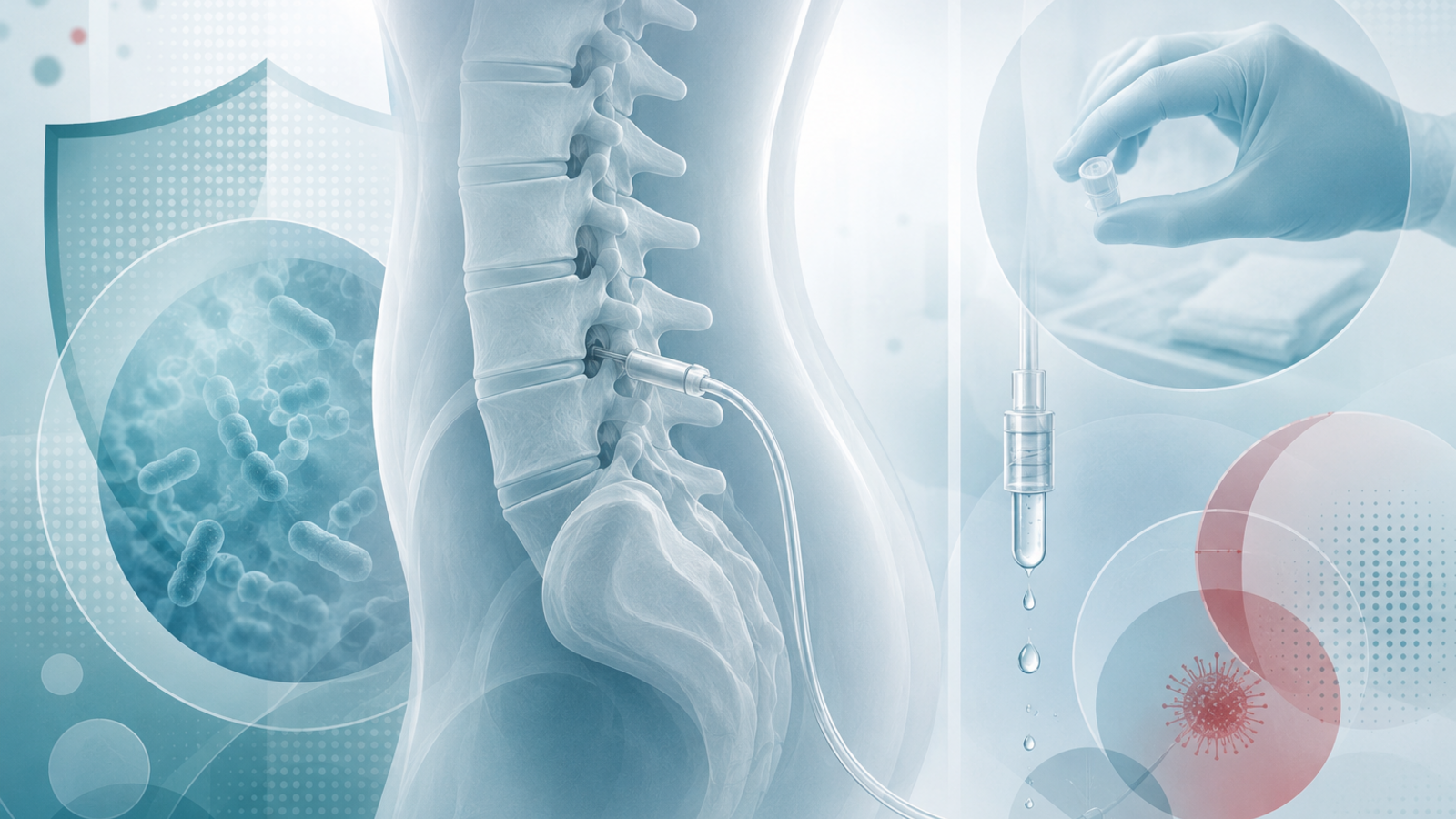
This study examined infection after lumbar drain insertion, a method used to divert cerebrospinal fluid in neurosurgical care. It helps identify factors that may increase or reduce infection risk, which can support safer planning and monitoring.
Research snapshot
Article title: Lumbar Drain Infection Rates: A Comprehensive Risk Factor Analysis From a Multicenter Retrospective Study of 1000+ Cases
Authors: Asfand Baig Mirza, Maria Alexandra Velicu, Amisha Vastani, et al.
Publication type: Journal article
Publication date: 1 March 2026
Publication details: Neurosurgery. 2026;98(3):552-560. Epub 28 July 2025.
PMID: 40719454
PMCID:
DOI: 10.1227/neu.0000000000003662
Study type: Retrospective multicentre cohort study
Mr Grahovac’s involvement: Listed author on the publication
Original publication: View the original publication on PubMed
What this paper looked at
This paper looked at lumbar drain infection in adult neurosurgical patients. The study reviewed more than 1,000 lumbar drain cases across four neurosurgical units over a 15-year period to explore infection incidence, causative factors and risk factors.
Key points from the publication
The publication reported 1,017 lumbar drain cases and an overall infection rate of 11.4% in the abstract available through indexed records. Reported risk factors included steroid use, drain timing and duration, out-of-hours surgery and cerebrospinal fluid leak or drain-site problems. The authors also identified factors associated with lower infection risk, including insertion during the primary surgery.
Clinical relevance
Lumbar drain infection can cause significant morbidity, so understanding modifiable risk factors is important for surgical planning, infection control, patient counselling and postoperative monitoring.
What this means in context
The findings should be interpreted as risk information from a retrospective multicentre cohort, not as a prediction for any individual patient. Drain use, timing, removal and infection-prevention decisions depend on the clinical indication, operative context and specialist judgement.
View published abstract
The following abstract is reproduced from the original publication and is provided for reference. It may include technical terminology intended for clinical or academic audiences.
Background and objectives: Lumbar drain (LD) insertion is a common cerebrospinal fluid (CSF) diversion method in neurosurgery; however, infection remains a major complication with significant morbidity. We evaluated the incidence, etiology, and associated risk factors of LD infection across 4 neurosurgical units over 15 years.
Methods: This retrospective multicenter cohort study included all adults requiring a LD between January 2009 and February 2024. Demographic, clinical, and microbiological characteristics were analyzed. LD infections were defined by positive CSF cultures and clinical symptoms. Risk factors were assessed by multivariate logistic regression analysis using IBM SPSS®.
Results: A total of 1017 patients required a LD, and the overall infection rate was 11.4% (116 infections). Significant risk factors for LD infection identified by univariate analysis were preoperative use of oral steroids ( P < .001), previous CSF drainage ( P = .019), LD insertion for 2 or more days ( P = .001), out-of-hours surgery ( P = .008), and CSF leak at the operation site ( P = .007). Conversely, factors reducing the risk of infection were LD insertion during the primary surgery ( P = .015) and the reason for insertion ( P = .029). Multivariate analysis confirmed increased incidence of LD infection with oral steroid use ( P = .01), LD insertion >7 days after the primary surgery ( P = .019), no previous CSF drainage ( P = .029), LD removal ≥2 days ( P = .002), out-of-hours primary surgery ( P = .024), CSF leak from the LD puncture site >2 days after LD insertion ( P = .074), LD disconnection >3 days postinsertion ( P = .028), and bleeding from the LD puncture site >2 days after drain insertion ( P = .026).
Conclusion: We report a large patient series evaluating the factors associated with LD infections across multiple neurosurgical subspecialties. To reduce infection risk, LDs should be inserted during primary surgery, kept for the shortest duration, and promptly removed if disconnected, avoiding unnecessary sampling.
Keywords: CSF diversions; External CSF drain; Infection rate; Lumbar catheter; Lumbar drain.
View the original publication on PubMed
About Mr Gordan Grahovac
Mr Gordan Grahovac is a Consultant Neurosurgeon and Complex Spinal Surgeon with expertise in managing complex spinal and neurosurgical conditions.
His work includes the assessment and treatment of patients with degenerative spinal conditions, spinal cord compression, spinal tumours, complex spinal pathology and conditions requiring specialist neurosurgical input.
His approach focuses on careful diagnosis, appropriate treatment planning and helping patients understand their options clearly.
Important note
This page is for educational purposes only and should not be taken as individual medical advice.
If you or someone you know has symptoms such as worsening headache, confusion, drowsiness, weakness, changes in speech, seizures, balance problems or symptoms following a head injury, seek urgent medical advice.
