
Chiari type I malformation of infants and toddlers
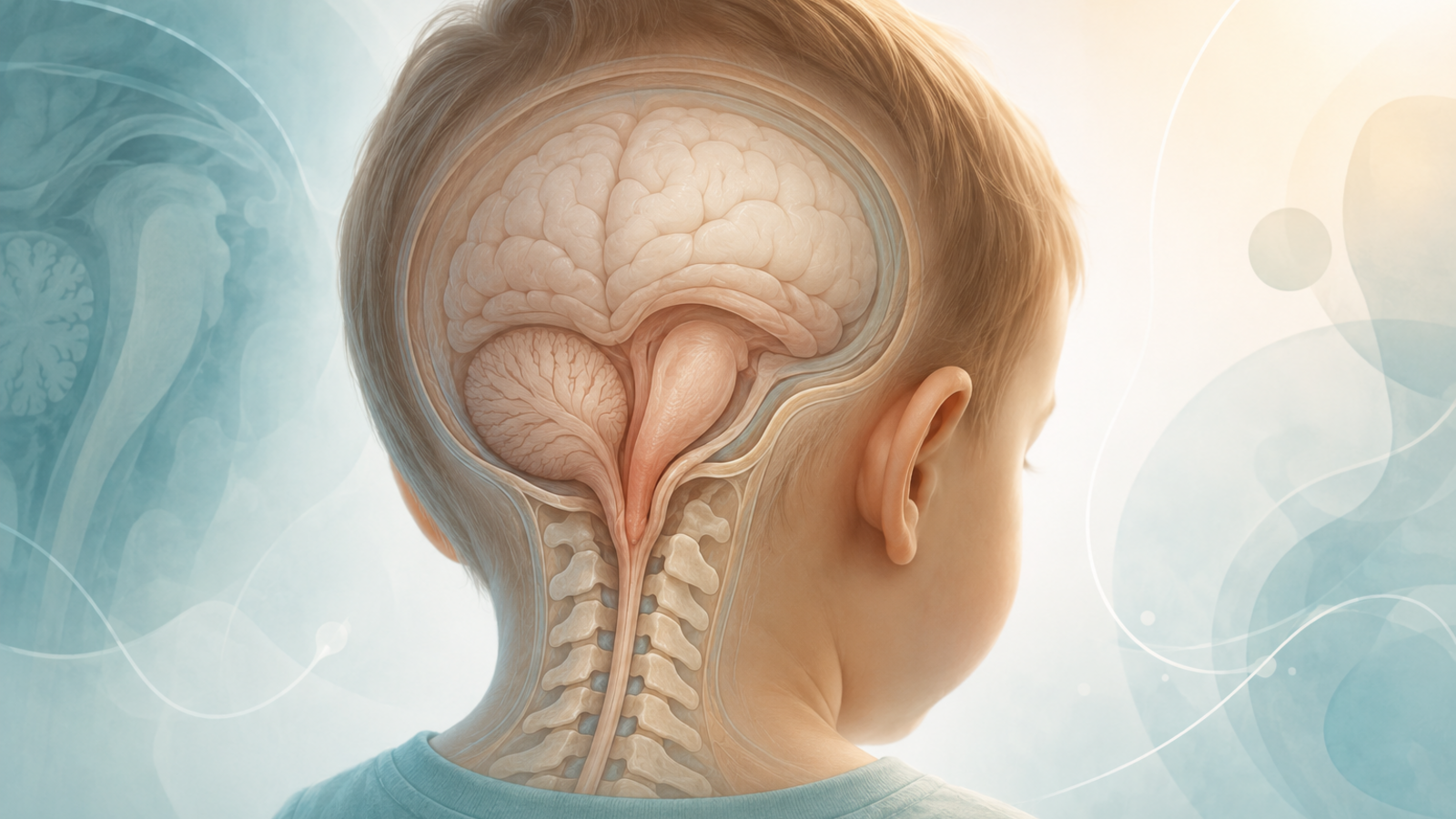
Published research co-authored by Mr Gordan Grahovac
This paper examined Chiari type I malformation in very young children. It is relevant because infants and toddlers may present differently from older children or adults, making diagnosis and management more challenging.
Research snapshot
Article title: Chiari type I malformation of infants and toddlers
Authors: Gordan Grahovac, Tatiana Pundy, Tadanori Tomita
Publication type: Journal article
Publication date: 2 February 2018
Publication details: Child's Nervous System. 2018;34(6):1169-1176.
PMID: 29396718
PMCID: PMC5978832
DOI: 10.1007/s00381-017-3712-7
Study type: Case series
Mr Grahovac’s involvement: Listed author on the publication
Original publication: View the original publication on PubMed
What this paper looked at
This publication focused on Chiari type I malformation in infants and toddlers. The authors analysed their series of young patients, paying attention to symptoms and MRI findings in an age group that may not be able to describe symptoms clearly.
Key points from the publication
The indexed record confirms Mr Grahovac as first author. The abstract states that Chiari I malformation is recognised clinically but unusual in infants and toddlers, and that presentation may differ because of limited verbal communication.
Clinical relevance
The paper is relevant to paediatric neurosurgical assessment, imaging interpretation and counselling for families of very young children with Chiari I malformation.
What this means in context
This research relates to paediatric Chiari I malformation and should not be applied directly to adult patients. Management depends on symptoms, imaging, age, neurological findings and paediatric specialist assessment.
View published abtract
The following abstract is reproduced from the original publication and is provided for reference. It may include technical terminology intended for clinical or academic audiences.
Objectives: Chiari I malformation has been a well-recognized clinical entity; however, its occurrence among infants and toddlers is unusual. Their clinical presentations may be different from other age groups due to their lack of effective verbal communication. The authors analyze their personal series of patients focusing on symptomatology and MRI characteristics. Treatment methods, results, and outcome are analyzed in order to identify appropriate surgical management among infants and toddlers with Chiari I malformation.
Methods: The authors retrospectively reviewed 16 patients who were diagnosed and surgically treated between 2007 and 2014 during the first 3 years of life with minimum follow-up of 3 years. We focused on the presenting symptoms, magnetic resonance imaging findings, and surgical techniques used for posterior fossa decompression (PFD) and their postoperative outcome.
Results: Twelve patients (75%) presented with signs of headaches such as irritability, inconsolable crying, head grabbing, and/or arching back. Ten patients (62.5%) presented with oropharyngeal and/or respiratory symptoms such as emesis, choking, gagging, snoring, sleep apnea, breathing pause, and/or vocal cord palsy. Only one patient had segmental cervical hydromyelia. At the first surgery, ten patients had PFD with dural scoring (Type 1 procedure), while six others had PFD with duraplasty (Type 2 procedure) with thermal reduction of the cerebellar tonsils in four. Following the first operation, all initially had varying degrees of symptomatic improvement; however, seven patients subsequently had symptomatic recurrence. Persistent crowding at the PFD site on the postoperative imaging indicated greater risk of recurrences in both Type 1 procedure and Type 2 procedure groups. Of seven patients who needed a second operation, fivewere after Type 1 procedure and the two were after Type 2 procedure. The difference of recurrence rates between these two groups is not significant. CSF-related complications occurred in 4 out of 11 patients who had Type 2 procedure (one after primary decompression and three after the second decompression for recurrence).
Conclusion: Young patients lacking effective verbal communication often present their Chiari I malformation differently from olderage groups. Behavioral changes indicative of headaches/irritability and oropharyngeal/respiratory symptoms are the primary presenting symptoms. The recurrence rate tends to be higher among the patients after Type 1 procedure (particularly those younger than 18 months) than after Type 2 procedure. We observed that duraplasty at primary or at redo PFD provides for better decompression and long-term outcome. However, one should keep it in mind that there is risk of CSF-related complications following duraplasty, particularly higher tendency after redo PFD.
Keywords: Chiari type 1 malformation; Infants; Posterior fossa decompression.
View the original publication on PubMed
About Mr Gordan Grahovac
Mr Gordan Grahovac is a Consultant Neurosurgeon and Complex Spinal Surgeon with expertise in managing complex spinal and neurosurgical conditions.
His work includes the assessment and treatment of patients with degenerative spinal conditions, spinal cord compression, spinal tumours, complex spinal pathology and conditions requiring specialist neurosurgical input.
His approach focuses on careful diagnosis, appropriate treatment planning and helping patients understand their options clearly.
Important note
This page is for educational purposes only and should not be taken as individual medical advice.
If you or someone you know has symptoms such as worsening headache, confusion, drowsiness, weakness, changes in speech, seizures, balance problems or symptoms following a head injury, seek urgent medical advice.
