
Spinal Cord Compression Caused by Fibroblastic Reticular Cell Tumor (FRCT) Originating from Thoracic Spine
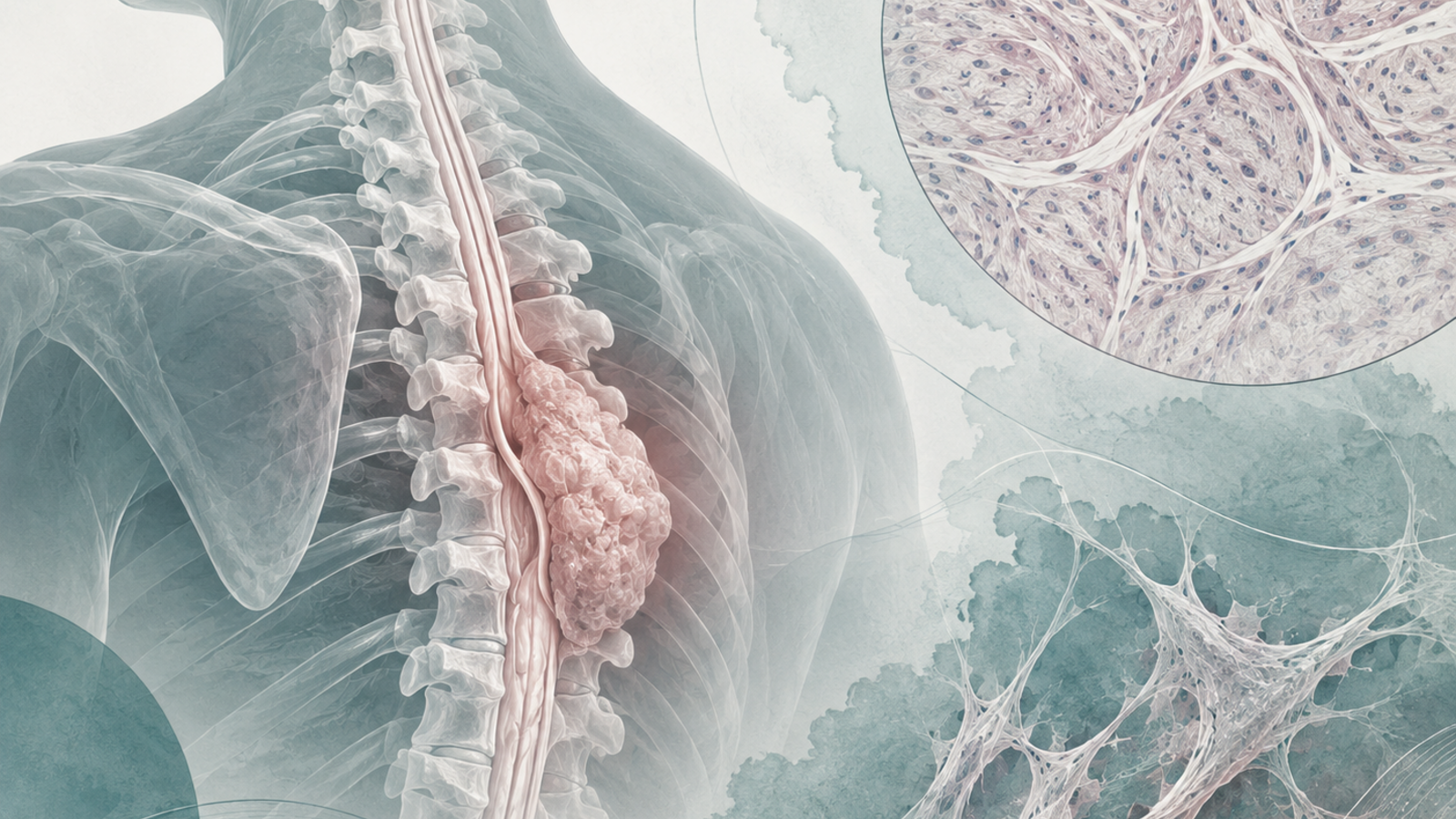
Published research co-authored by Mr Gordan Grahovac
This case report described a rare fibroblastic reticular cell tumour arising in the thoracic spine and causing spinal cord compression. It is relevant because rare tumours can mimic more common causes of spinal cord compression on imaging.
Research snapshot
Article title: Spinal Cord Compression Caused by Fibroblastic Reticular Cell Tumor (FRCT) Originating from Thoracic Spine
Authors: Asfand Baig Mirza, Ravindran Visagan, Zita Reisz, Istvan Bodi, David Bell, Gordan Grahovac
Publication type: Case report
Publication date: 1 June 2020
Publication details: World Neurosurgery. 2020;141:20-24.
PMID: 32497850
PMCID:
DOI: 10.1016/j.wneu.2020.05.190
Study type: Case report and literature review
Mr Grahovac’s involvement: Listed author on the publication
Original publication: View the original publication on PubMed
What this paper looked at
This publication reported a rare fibroblastic reticular cell tumour originating from the thoracic spine and presenting with spinal cord compression. The authors described clinical presentation, imaging, histology, surgery and adjuvant treatment.
Key points from the publication
The PubMed abstract describes a 45-year-old woman with flu-like symptoms followed by lower limb imbalance. MRI showed an extradural T3/4 lesion compressing the spinal cord, and histology later identified a primary fibroblastic reticular cell tumour rather than metastatic compression.
Clinical relevance
The paper is clinically relevant to rare causes of spinal cord compression and the importance of histological diagnosis when imaging appearances are not specific.
What this means in context
A single case report should not be generalised to all spinal cord compression cases. Diagnosis and treatment depend on imaging, pathology, neurological status, oncological input and specialist multidisciplinary review.
View published abstract
The following abstract is reproduced from the original publication and is provided for reference. It may include technical terminology intended for clinical or academic audiences.
Background: The authors present the first reported case of a fibroblastic reticular cell tumor (FRCT) presenting with spinal cord compression. FRCTs are the rarest subset of dendritic cell tumors, a specific group of hematologic malignancies. FRCTs reportedly behave similar to low-grade sarcomas as opposed to malignant tumors.
Case description: A 45-year-old female patient presented with a 2-and-a-half week history of a flu-like illness and 1 week history of lower limb imbalance. Magnetic resonance imaging revealed an extradural lesion at T3/4 compressing the spinal cord. Initially, the patient was presumed to have metastatic spinal cord compression, and she underwent a decompressive thoracic laminectomy with debulking of the lesion with follow-up adjuvant radiotherapy. However, histology identified a unique primary FRCT originating from spine, not secondary metastatic spinal cord compression. There were no histologically aggressive features likely contributing to the favorable outcome following surgery and adjuvant radiotherapy. Her postoperative recovery was unremarkable, and she recovered fully.
Conclusions: Although rare, we report the first case of FRCT originating in the spine causing spinal cord compression. The clinical presentation of the case, histologic features of FRCT, and the treatment options are reviewed.
Keywords: Dendritic cell tumor; Fibroblastic reticular cell tumor; Metastatic spinal cord compression.
View the original publication on PubMed
About Mr Gordan Grahovac
Mr Gordan Grahovac is a Consultant Neurosurgeon and Complex Spinal Surgeon with expertise in managing complex spinal and neurosurgical conditions.
His work includes the assessment and treatment of patients with degenerative spinal conditions, spinal cord compression, spinal tumours, complex spinal pathology and conditions requiring specialist neurosurgical input.
His approach focuses on careful diagnosis, appropriate treatment planning and helping patients understand their options clearly.
Important note
This page is for educational purposes only and should not be taken as individual medical advice.
If you or someone you know has symptoms such as worsening headache, confusion, drowsiness, weakness, changes in speech, seizures, balance problems or symptoms following a head injury, seek urgent medical advice.
