
Recurrent terminal ventricle cyst: a case report
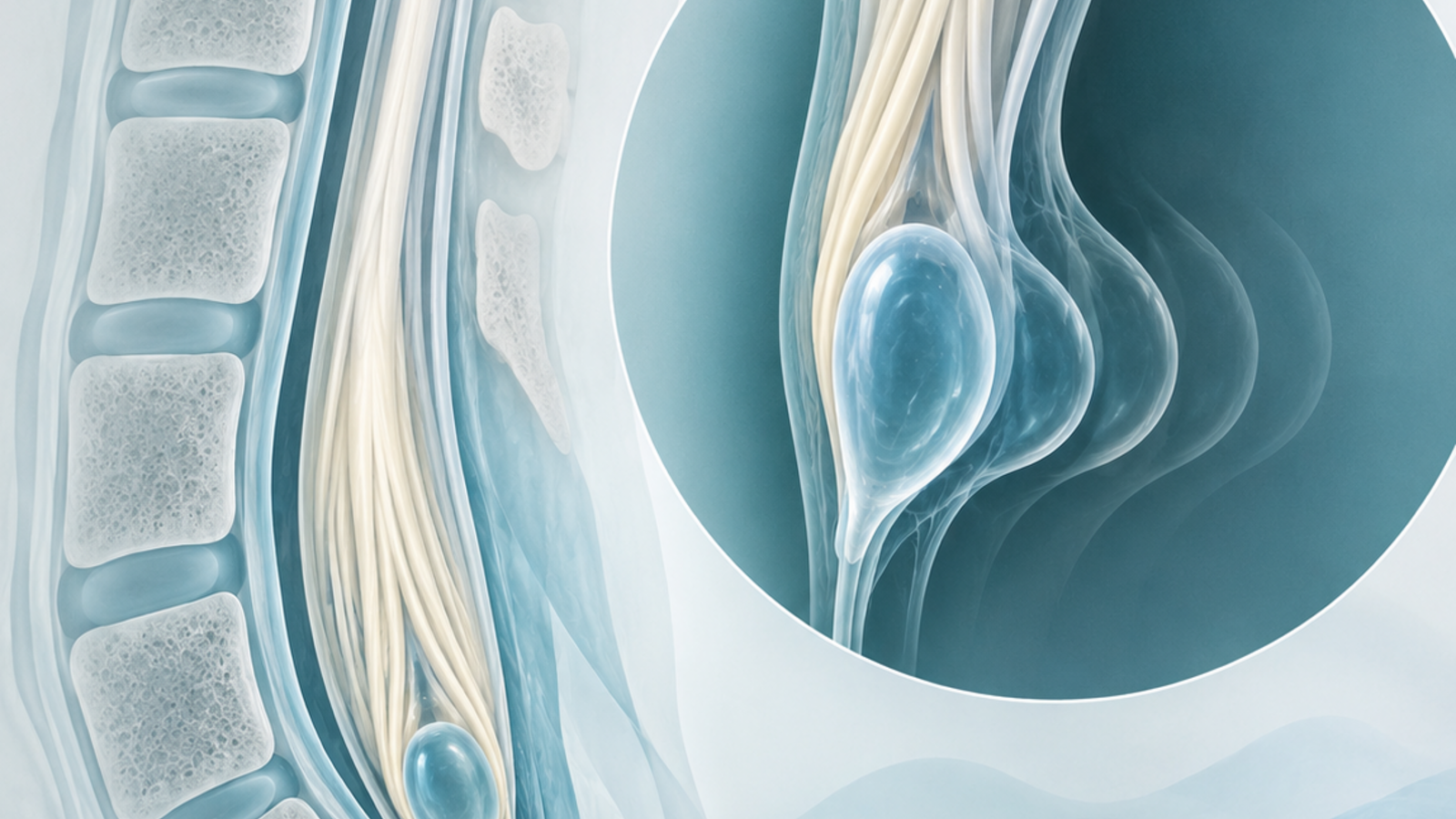
Published research co-authored by Mr Gordan Grahovac
This case report described a rare cystic lesion in the conus medullaris called a terminal ventricle cyst. It is relevant because these lesions are uncommon and management can be difficult when symptoms fluctuate or recur.
Research snapshot
Article title: Recurrent terminal ventricle cyst: a case report
Authors: Asfand Baig Mirza, Ravindran Visagan, Timothy Martyn Boardman, Eleanor Dyson, Jose Pedro Lavrador, Gordan Grahovac
Publication type: Case report
Publication date: 1 November 2021
Publication details: Journal of Surgical Case Reports. 2021;2021(11):rjab498.
PMID: 34804483
PMCID: PMC8598984
DOI: 10.1093/jscr/rjab498
Study type: Case report
Mr Grahovac’s involvement: Listed author on the publication
Original publication: View the original publication on PubMed
What this paper looked at
This publication described a recurrent terminal ventricle cyst, a rare cystic dilation related to the conus medullaris. It considered presentation, imaging and the management challenge posed by limited understanding of the condition.
Key points from the publication
The abstract describes a 25-year-old woman presenting with acute paraparesis and MRI findings consistent with a cystic conus medullaris lesion. The report discusses recurrence and the uncertainty surrounding optimal treatment.
Clinical relevance
The case is relevant to rare spinal cyst diagnosis, management planning and counselling when symptoms and imaging do not fit common spinal conditions.
What this means in context
A single case report is useful for awareness but cannot establish a standard treatment pathway. Decisions depend on neurological symptoms, imaging change, recurrence, risk and specialist assessment.
View published abstract
The following abstract is reproduced from the original publication and is provided for reference. It may include technical terminology intended for clinical or academic audiences.
The terminal ventricle (TV) of Krause is a rare cystic dilation of the conus' central canal. Due to limited understanding surrounding its pathophysiology, optimal management remains controversial. We report a 25-year-old female presenting with acute paraparesis. Magnetic resonance imaging spine revealed a cystic conus medullaris lesion in keeping with an incidental TV cyst. However, the patient experienced a rapid resolution of symptoms. We hypothesize that the TV cyst spontaneously ruptured and auto-decompressed. To our knowledge, this is the first reported case of an enlarging symptomatic TV cyst with spontaneous rupture and resolution of symptoms, highlighting the variable natural history of this condition.
View the original publication on PubMed
About Mr Gordan Grahovac
Mr Gordan Grahovac is a Consultant Neurosurgeon and Complex Spinal Surgeon with expertise in managing complex spinal and neurosurgical conditions.
His work includes the assessment and treatment of patients with degenerative spinal conditions, spinal cord compression, spinal tumours, complex spinal pathology and conditions requiring specialist neurosurgical input.
His approach focuses on careful diagnosis, appropriate treatment planning and helping patients understand their options clearly.
Important note
This page is for educational purposes only and should not be taken as individual medical advice.
If you or someone you know has symptoms such as worsening headache, confusion, drowsiness, weakness, changes in speech, seizures, balance problems or symptoms following a head injury, seek urgent medical advice.
