
Intraoperative Neurophysiological Monitoring for Intradural Extramedullary Spinal Tumours
Published research co-authored by Mr Gordan Grahovac
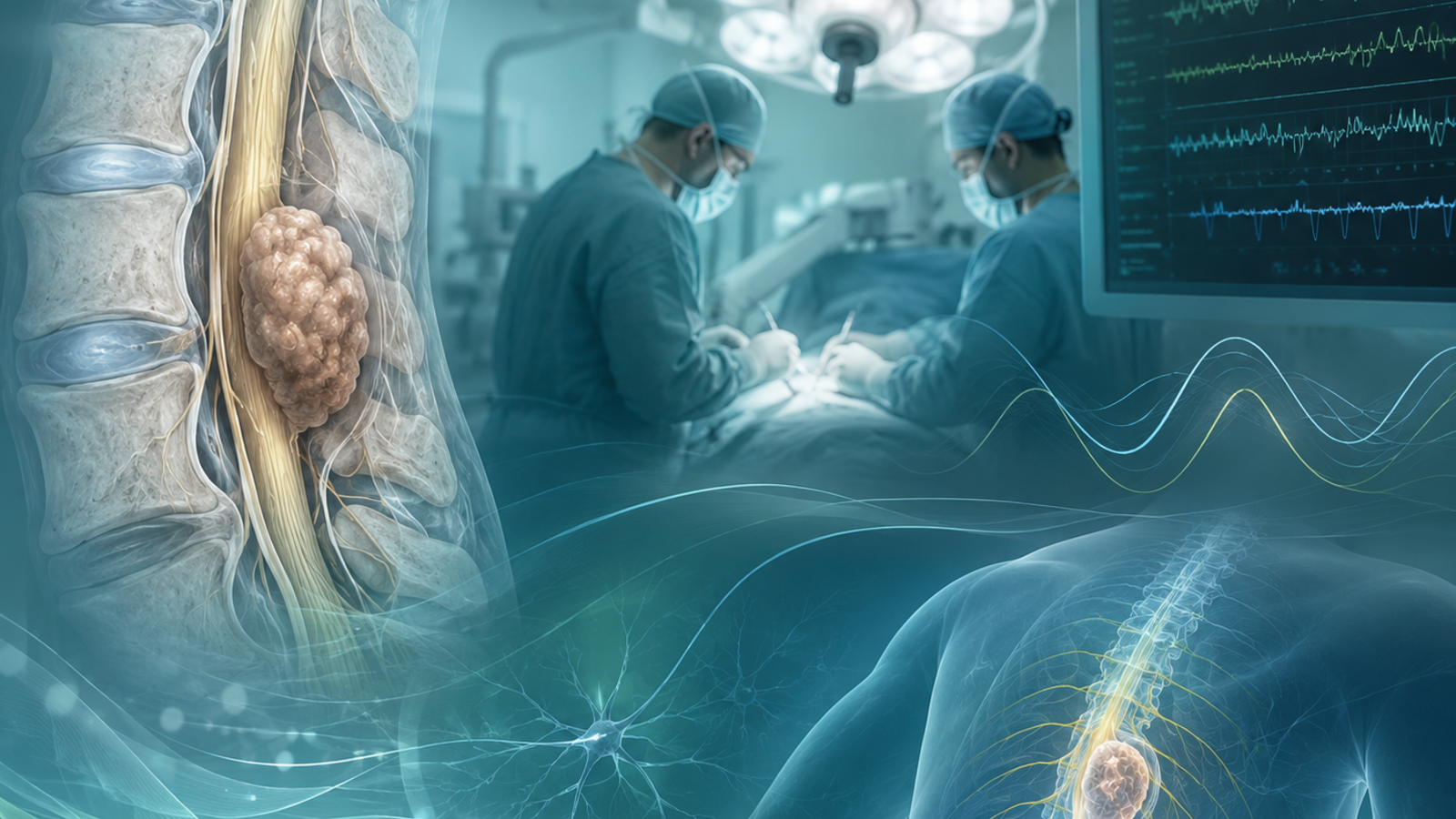
This study assessed intraoperative neurophysiological monitoring during surgery for intradural extramedullary spinal tumours. It is relevant because monitoring may help surgeons understand and reduce neurological risk during delicate spinal tumour operations.
Research snapshot
Article title: Intraoperative Neurophysiological Monitoring for Intradural Extramedullary Spinal Tumours
Authors: Asfand Baig Mirza, Amisha Vastani, Christoforos Syrris, Timothy Boardman, Imran Ghani, Christopher Murphy, Axumawi Gebreyohanes, Francesco Vergani, Ana Mirallave-Pescador, Jose Pedro Lavrador, Ahilan Kailaya-Vasan, Gordan Grahovac
Publication type: Journal article
Publication date: 21 November 2022
Publication details: Global Spine Journal. 2024;14(4):1304-1315.
PMID: 36411068
PMCID: PMC11289564
DOI: 10.1177/21925682221139822
Study type: Retrospective cohort study
Mr Grahovac’s involvement: Listed author on the publication
Original publication: View the original publication on PubMed
What this paper looked at
This paper studied intraoperative neurophysiological monitoring in surgery for intradural extramedullary spinal tumours. It compared outcomes for patients who had tumour resection with and without monitoring between 2010 and 2020.
Key points from the publication
The article is described as a retrospective cohort study. The abstract explains that IONM is widely used in spinal neurosurgery, especially for intramedullary tumours, but that its role in intradural extramedullary tumours is less clearly defined.
Clinical relevance
The paper is clinically relevant to risk reduction, surgical planning and neurological monitoring during spinal tumour surgery.
What this means in context
Monitoring is one part of surgical safety and does not remove all neurological risk. Decisions about its use depend on tumour type, location, patient factors, surgical approach and local expertise.
View published abstract
The following abstract is reproduced from the original publication and is provided for reference. It may include technical terminology intended for clinical or academic audiences.
Study design: Retrospective cohort study.
Objectives: Intraoperative neurophysiological monitoring (IONM) is widely used in spinal neurosurgery, particularly for intramedullary tumours. However, its validity in intradural extramedullary (IDEM) spinal tumours is less clearly defined, this being the focus of this study.
Methods: We compared outcomes for patients that underwent resection of IDEM tumours with and without IONM between 2010 and 2020. Primary outcomes were postoperative American Spinal Injury Association (ASIA) scores. Other factors assessed were use of intraoperative ultrasound, drain placement, postoperative complications, postoperative Eastern Cooperative Oncology Group (ECOG) score, extent of resection, length of hospital stay, discharge location and recurrence.
Results: 163 patients were included, 71 patients in the IONM group and 92 in the non-IONM group. No significant differences were noted in baseline demographics. For preoperative ASIA D patients, 44.0% remained ASIA D and 49.9% improved to ASIA E in the IONM group, compared to 39.7% and 30.2% respectively in the non-IONM group. For preoperative ASIA E patients, 50.3% remained ASIA E and 44.0% deteriorated to ASIA D in the IONM group, compared to 30.2% and 39.7% respectively in the non-IONM group (all other patients deteriorated further). Length of inpatient stay was significantly shorter in the IONM group (P = .043). There were no significant differences in extent of resection, postoperative complications, discharge location or tumour recurrence.
Conclusions: Research focusing on the use of IONM in IDEM tumour surgery remains scarce. Our study supports the use of IONM during surgical excision of IDEM tumours.
Keywords: intradural extramedullary spinal cord tumours; intraoperative neurophysiological monitoring; spinal neurosurgery.
View the original publication on PubMed
About Mr Gordan Grahovac
Mr Gordan Grahovac is a Consultant Neurosurgeon and Complex Spinal Surgeon with expertise in managing complex spinal and neurosurgical conditions.
His work includes the assessment and treatment of patients with degenerative spinal conditions, spinal cord compression, spinal tumours, complex spinal pathology and conditions requiring specialist neurosurgical input.
His approach focuses on careful diagnosis, appropriate treatment planning and helping patients understand their options clearly.
Important note
This page is for educational purposes only and should not be taken as individual medical advice.
If you or someone you know has symptoms such as worsening headache, confusion, drowsiness, weakness, changes in speech, seizures, balance problems or symptoms following a head injury, seek urgent medical advice.
