
Surgical management and outcomes in spinal intradural arachnoid cysts: the experience from two tertiary neurosurgical centres
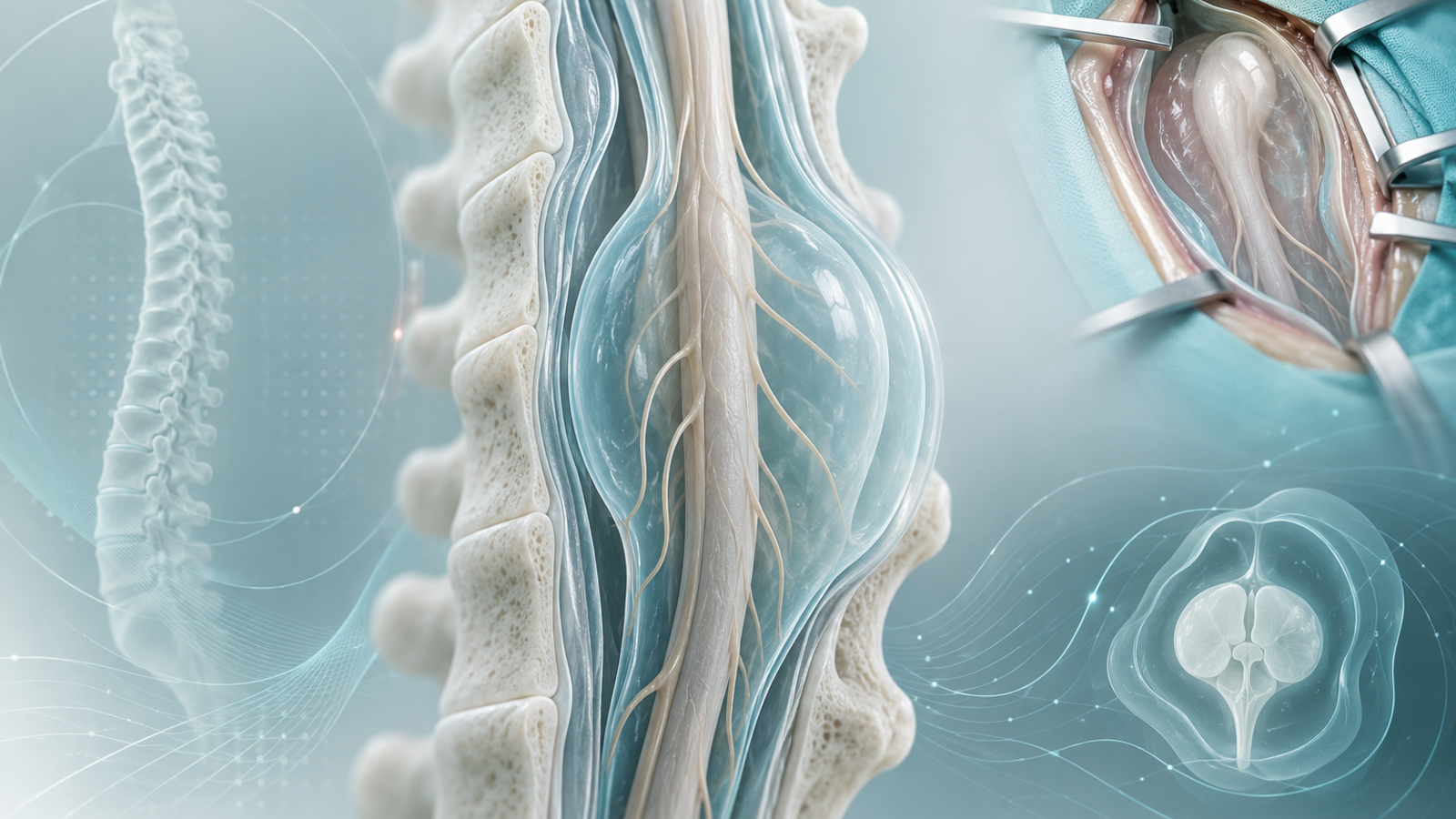
Published research co-authored by Mr Gordan Grahovac
This study reviewed patients treated surgically for spinal intradural arachnoid cysts across two tertiary neurosurgical centres. It is useful because these cysts are rare and evidence on presentation and outcomes is limited.
Research snapshot
Article title: Surgical management and outcomes in spinal intradural arachnoid cysts: the experience from two tertiary neurosurgical centres
Authors: Asfand Baig Mirza, James Bartram, Siddharth Sinha, Axumawi Gebreyohanes, Timothy Boardman, Amisha Vastani, Ellen Dyson, Jose Pedro Lavrador, Valentina Russo, Dorward Choi, David Bell, Nick Thomas, Ahilan Kailaya-Vasan, Irfan Malik, Gordan Grahovac
Publication type: Journal article
Publication date: 27 October 2021
Publication details: Acta Neurochirurgica. 2022;164(5):1217-1228.
PMID: 34705099
PMCID:
DOI: 10.1007/s00701-021-05027-3
Study type: Retrospective two-centre case series
Mr Grahovac’s involvement: Listed author on the publication
Original publication: View the original publication on PubMed
What this paper looked at
This publication evaluated presentation and outcomes after different surgical approaches for spinal intradural arachnoid cysts. Cases were identified from electronic records across two major neurosurgical centres in London over a 10-year period from October 2009 to October 2019.
Key points from the publication
The abstract states that surgically treated cases were reviewed across two tertiary centres. The paper focused on clinical presentation, surgical management and postoperative outcomes in a rare spinal cyst condition.
Clinical relevance
The paper is relevant for diagnosis, treatment planning and counselling in patients with spinal intradural arachnoid cysts, particularly where symptoms relate to spinal cord or nerve compression.
What this means in context
The study helps describe experience from specialist centres, but individual treatment depends on symptoms, cyst location, cord compression, imaging features and surgical risk.
View published abstract
The following abstract is reproduced from the original publication and is provided for reference. It may include technical terminology intended for clinical or academic audiences.
Purpose: Evaluation of the presentation and outcomes of different surgical treatment approaches for spinal intradural arachnoid cysts (SIAC).
Methods: Cases were identified from electronic records of two major neurosurgical centres in London over the last 10 years (October 2009-October 2019) that have been surgically treated in both institutions. Clinical findings, surgical technique, and recurrence by procedure were statistically analysed. Statistical analysis was performed with STATA 13.1 Software.
Results: A total of 42 patients with SIAC were identified for this study with a mean age at the time of surgery of 53.6 years and a male:female ratio of 8:13. There were 31 patients with primary SIACs and 11 with secondary SIACs. The most common presenting symptom was paraesthesia (n = 27). The most common location of the cyst was in the thoracic region (n = 33). Syrinx was present in 26.2% of SIACs (n = 11). Resection was associated with significantly better postoperative pain compared to other surgical techniques (p = 0.01), significantly poorer postoperative urinary function (p = 0.029), and lower rates of sensory recovery in patients who presented preoperatively with sensory deficit (p = 0.041). No significant difference was seen in symptomatic outcomes between patients with primary and secondary SIACs.
Conclusion: Resection and drainage are both effective methods of managing SIACs. In this observational study, resection was associated with significantly reduced pain postoperatively when compared with drainage, however also with significantly less improvement in postoperative urinary function. Therefore, resection should be the gold standard management option for SIACs, with drainage as an option where resection is unsafe, and drainage should also be considered in patients presenting with urinary dysfunction.
Keywords: Intradural; Management; Outcome; Spinal cysts; Surgery.
View the original publication on PubMed
About Mr Gordan Grahovac
Mr Gordan Grahovac is a Consultant Neurosurgeon and Complex Spinal Surgeon with expertise in managing complex spinal and neurosurgical conditions.
His work includes the assessment and treatment of patients with degenerative spinal conditions, spinal cord compression, spinal tumours, complex spinal pathology and conditions requiring specialist neurosurgical input.
His approach focuses on careful diagnosis, appropriate treatment planning and helping patients understand their options clearly.
Important note
This page is for educational purposes only and should not be taken as individual medical advice.
If you or someone you know has symptoms such as worsening headache, confusion, drowsiness, weakness, changes in speech, seizures, balance problems or symptoms following a head injury, seek urgent medical advice.
