
Prognostic factors and surgical outcomes of spontaneous spinal epidural haematoma: a systematic review and meta-analysis
Published research co-authored by Mr Gordan Grahovac
This review examined factors linked with surgical outcomes in spontaneous spinal epidural haematoma. It is relevant because this rare condition can cause serious neurological symptoms and often requires urgent specialist assessment.
Research snapshot
Article title: Prognostic factors and surgical outcomes of spontaneous spinal epidural haematoma: a systematic review and meta-analysis
Authors: Amisha Vastani, Asfand Baig Mirza, Abbas Khizar Khoja, James Bartram, Sara Shaheen, S Rajkumar, M China, Jose Pedro Lavrador, Cristina Bleil, David Bell, Nick Thomas, Irfan Malik, Gordan Grahovac
Publication type: Review
Publication date: 20 December 2022
Publication details: Neurosurgical Review. 2023;46(1):21.
PMID: 36538111
PMCID:
DOI: 10.1007/s10143-022-01914-0
Study type: Systematic review and meta-analysis
Mr Grahovac’s involvement: Listed author on the publication
Original publication: View the original publication on PubMed
What this paper looked at
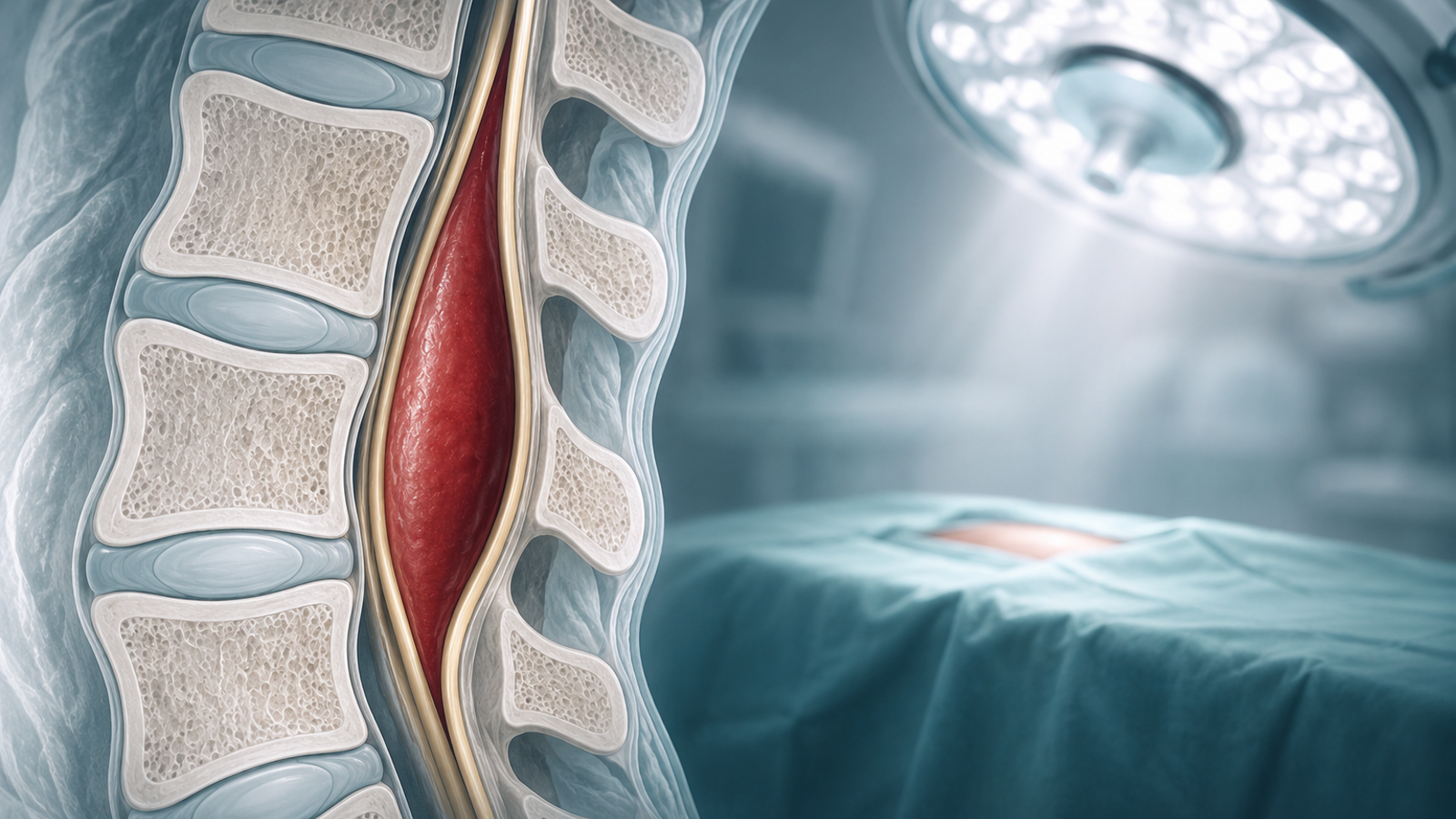
This publication reviewed spontaneous spinal epidural haematoma, a rare accumulation of blood in the spinal epidural space without an identified cause. It aimed to understand prognostic factors affecting surgical outcomes.
Key points from the publication
The abstracted publication record describes a systematic review and meta-analysis focused on surgical outcomes and prognostic factors in true spontaneous spinal epidural haematoma. Detailed pooled estimates should be checked in the full text before being quoted.
Clinical relevance
The paper is clinically relevant to emergency assessment, surgical timing, neurological prognosis and counselling in a rare but potentially serious spinal condition.
What this means in context
The evidence helps frame risk and prognosis, but individual treatment decisions depend on neurological status, imaging findings, timing, comorbidities, anticoagulant use and specialist judgement.
View published abstract
The following abstract is reproduced from the original publication and is provided for reference. It may include technical terminology intended for clinical or academic audiences.
Spontaneous spinal epidural haematoma (SSEH) is a rare disease defined as blood accumulation within the vertebral epidural space without a cause identified, which can lead to severe neurological deficits. We aim to provide a comprehensive understanding of the prognostic factors affecting surgical outcomes in true SSEH and propose a critical time frame for operative management. A systematic literature search was performed and registered, using OVID Medline and EMBASE, in line with the PRISMA guidelines. Relevant demographic, clinical, surgical, and outcome data were extracted. The ASIA scale was uniformly used throughout our systematic review. Statistical analysis was performed via logistic regression. Of the 1179 articles examined, we included 181 studies involving 295 adult patients surgically treated for SSEH. SSEH were most commonly found in the cervicothoracic spine, with 2-4 spinal segments most commonly involved. Multivariable logistic regression model showed that the following factors were statistically significant in the post-operative outcome: operation type (P = 0.024), pre-operative neurologic status (P < 0.001), use of warfarin (P = 0.039), and operative interval (P = 0.006). Our retrospective analysis confirms the reversibility of severe neurological deficits after surgical intervention, with a prognosis of post-operative outcomes determined by the use of warfarin, pre-operative ASIA grade, and above all surgical evacuation within 12 h.
Keywords: Epidural haematoma; Spinal; Spontaneous; Surgical outcomes; Systematic review.
View the original publication on PubMed
About Mr Gordan Grahovac
Mr Gordan Grahovac is a Consultant Neurosurgeon and Complex Spinal Surgeon with expertise in managing complex spinal and neurosurgical conditions.
His work includes the assessment and treatment of patients with degenerative spinal conditions, spinal cord compression, spinal tumours, complex spinal pathology and conditions requiring specialist neurosurgical input.
His approach focuses on careful diagnosis, appropriate treatment planning and helping patients understand their options clearly.
Important note
This page is for educational purposes only and should not be taken as individual medical advice.
If you or someone you know has symptoms such as worsening headache, confusion, drowsiness, weakness, changes in speech, seizures, balance problems or symptoms following a head injury, seek urgent medical advice.
