
Systematic Review of Surgical Management of Spinal Intradural Arachnoid Cysts
Published research co-authored by Mr Gordan Grahovac
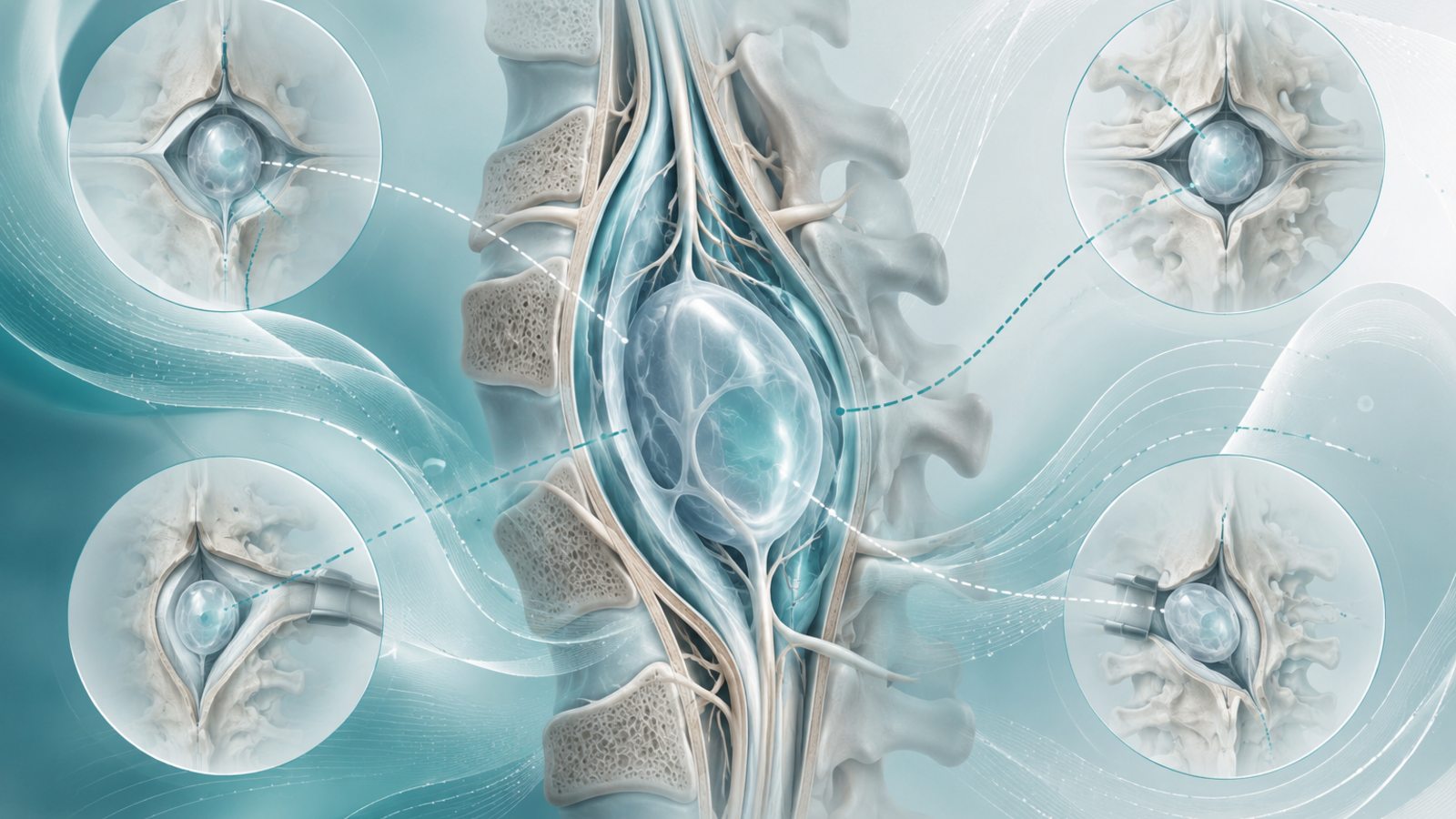
This systematic review examined surgical techniques used for spinal intradural arachnoid cysts. It is useful because these cysts are rare, and surgical decisions often rely on limited published experience.
Research snapshot
Article title: Systematic Review of Surgical Management of Spinal Intradural Arachnoid Cysts
Authors: Asfand Baig Mirza, James Bartram, Amisha Vastani, Gordan Grahovac, et al.
Publication type: Review
Publication date: 30 October 2021
Publication details: World Neurosurgery. 2022;158:e298-e309.
PMID: 34728397
PMCID:
DOI: 10.1016/j.wneu.2021.10.173
Study type: Systematic review
Mr Grahovac’s involvement: Listed author on the publication
Original publication: View the original publication on PubMed
What this paper looked at
This publication systematically reviewed the surgical management of spinal intradural arachnoid cysts. It searched the literature for articles describing surgical approaches, classification, associated syrinx, imaging, outcomes and follow-up.
Key points from the publication
The indexed record confirms the article as a World Neurosurgery systematic review. Search-result records describe a literature search using EMBASE and MEDLINE and data extraction on surgical approach and postoperative outcomes.
Clinical relevance
The review is relevant to surgical planning and counselling for patients with symptomatic spinal intradural arachnoid cysts.
What this means in context
A systematic review can summarise available evidence, but rare-condition data may still be limited and heterogeneous. Individual decisions depend on cyst anatomy, symptoms, imaging findings and specialist judgement.
View published abstract
The following abstract is reproduced from the original publication and is provided for reference. It may include technical terminology intended for clinical or academic audiences.
Objective: Spinal intradural arachnoid cysts (SIACs) are rare pathological lesions that can arise via outpouchings of the arachnoid layer in the spinal canal that can result in neurological deficits. We performed a systematic literature review regarding the current surgical techniques used in the management of SIACs and discussed the prevailing hypotheses surrounding the etiology of SIACs.
Methods: A systematic search of the literature was performed in December 2020 using EMBASE and MEDLINE for reports regarding the surgical management of SIACs. Data were collected regarding the demographics of the patients, classification system used, presence or absence of syrinxes, preoperative imaging modality, surgical approach and extent of resection, and postoperative outcomes and follow-up.
Results: Our search yielded 19 reports for inclusion in the present study. The 19 studies included a total of 414 cases, with an overall male/female ratio of 0.93:1. The most common site for the SIACs was the thoracic spinal cord at 77.5%. The symptoms were very similar across the 19 studies. Of the 19 studies, 15 had used resection to manage the SIACs, 10 had used fenestration or marsupialization, and 4 had used cystoarachnoid or cystoperitoneal shunts.
Conclusions: SIACs are rare and debilitating spinal pathological lesions, with the etiology of primary SIACs still not fully elucidated. Multiple surgical approaches have been effective, with the optimal operative strategy largely dependent on the individual patient and cyst factors on a case-by-case basis.
Keywords: Cyst; Intradural arachnoid; Spinal; Surgery; Systematic review.
View the original publication on PubMed
About Mr Gordan Grahovac
Mr Gordan Grahovac is a Consultant Neurosurgeon and Complex Spinal Surgeon with expertise in managing complex spinal and neurosurgical conditions.
His work includes the assessment and treatment of patients with degenerative spinal conditions, spinal cord compression, spinal tumours, complex spinal pathology and conditions requiring specialist neurosurgical input.
His approach focuses on careful diagnosis, appropriate treatment planning and helping patients understand their options clearly.
Important note
This page is for educational purposes only and should not be taken as individual medical advice.
If you or someone you know has symptoms such as worsening headache, confusion, drowsiness, weakness, changes in speech, seizures, balance problems or symptoms following a head injury, seek urgent medical advice.
