
Patient-Reported Bladder, Bowel, and Sexual Function After Cauda Equina Syndrome Secondary to a Herniated Lumbar Intervertebral Disc
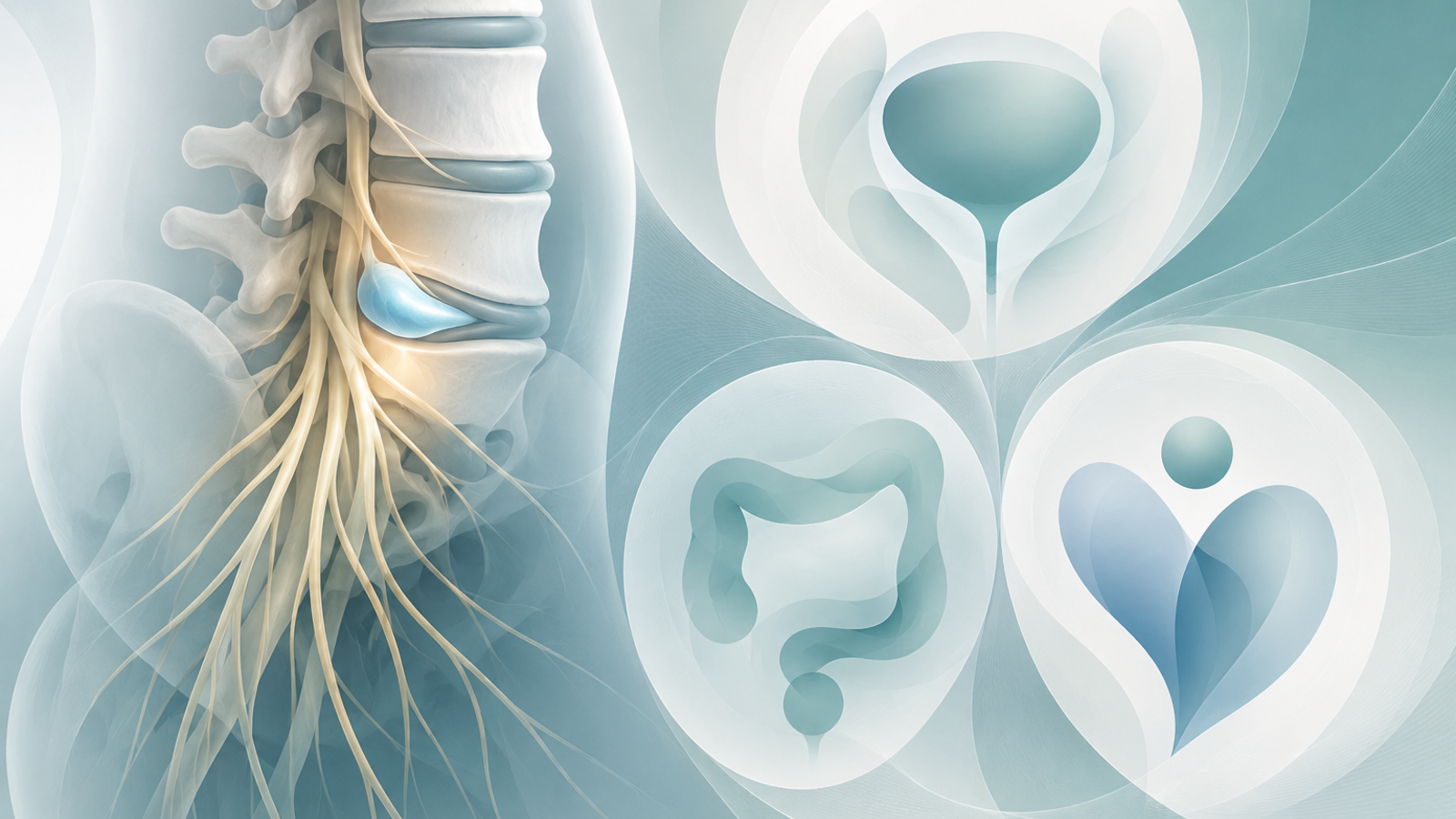
Published research co-authored by Mr Gordan Grahovac
This study examined long-term bladder, bowel and sexual function after cauda equina syndrome caused by a herniated lumbar disc. It is important because these symptoms can have a major effect on quality of life after surgery.
Research snapshot
Article title: Patient-Reported Bladder, Bowel, and Sexual Function After Cauda Equina Syndrome Secondary to a Herniated Lumbar Intervertebral Disc
Authors: Jordan Lam, Ruth-Mary deSouza, Jonathan Laycock, Duranka Perera, Charlotte Burford, Baha Khan, Gordan Grahovac
Publication type: Journal article
Publication date: 1 December 2020
Publication details: Topics in Spinal Cord Injury Rehabilitation. 2020;26(4):290-303.
PMID: 33536735
PMCID: PMC7831285
DOI: 10.46292/sci19-00065
Study type: Observational study
Mr Grahovac’s involvement: Listed author on the publication
Original publication: View the original publication on PubMed
What this paper looked at
This paper looked at people who had lumbar decompression for cauda equina syndrome caused by a herniated lumbar disc. It used a telephone-based survey with validated and modified tools to assess bladder, bowel and sexual function before CES and at least one year after surgery.
Key points from the publication
The study contacted 135 patients and included 71 respondents in the abstracted results. The publication reported ongoing bladder, bowel and sexual function issues in some patients, helping describe the longer-term impact of CES.
Clinical relevance
The paper is clinically relevant for patient counselling, outcome measurement and planning multidisciplinary support after cauda equina syndrome.
What this means in context
The findings do not predict recovery for an individual patient. Outcomes depend on severity at presentation, timing, neurological involvement, surgical findings, rehabilitation and access to specialist bladder, bowel or sexual-function support.
View published abstract
The following abstract is reproduced from the original publication and is provided for reference. It may include technical terminology intended for clinical or academic audiences.
Background: Cauda equina syndrome (CES) is rare neurosurgical emergency requiring emergent surgical decompression to prevent bladder, bowel, and sexual dysfunction that can have significant impact on quality of life. There is a paucity of data relating to the prevalence of these long-term complications.
Objective: The aim of this observational study was to evaluate the long-term prevalence of CES-related bladder, bowel, and sexual dysfunction and impact on quality of life to inform service provision.
Methods: Participants were selected through coding of operative records of patients who underwent lumbar decompression for CES secondary to a herniated intervertebral disc at two large UK neurosurgical departments between 2011 and 2015 inclusive. A telephone-based survey including both validated and modified tools was used to collect data pertaining to bladder, bowel, and sexual function and impact on quality of life both before development of CES and at the time of the survey, at least 1 year postoperatively.
Results: Of 135 patients contacted, 71 (42 male, 29 female) responded. Post-CES compared to pre-CES, there was higher prevalence and significant intrarespondent deterioration of bowel dysfunction, bladder dysfunction, perception of bladder function, sexual function, effect of back pain on sex life, and activities of daily living/quality of life (p < .0001 for all). Significant differences in individual questions pre-CES versus post-CES were also found.
Conclusion: We show high prevalence of long-term bowel, bladder, and sexual dysfunction post-CES, with functional and psychosocial consequences. Our results demonstrate the need for preoperative information and subsequent screening and long-term multidisciplinary support for these complications.
Keywords: back pain; cauda equina syndrome; quality of life; sexual function; sphincter dysfunction.
View the original publication on PubMed
About Mr Gordan Grahovac
Mr Gordan Grahovac is a Consultant Neurosurgeon and Complex Spinal Surgeon with expertise in managing complex spinal and neurosurgical conditions.
His work includes the assessment and treatment of patients with degenerative spinal conditions, spinal cord compression, spinal tumours, complex spinal pathology and conditions requiring specialist neurosurgical input.
His approach focuses on careful diagnosis, appropriate treatment planning and helping patients understand their options clearly.
Important note
This page is for educational purposes only and should not be taken as individual medical advice.
If you or someone you know has symptoms such as worsening headache, confusion, drowsiness, weakness, changes in speech, seizures, balance problems or symptoms following a head injury, seek urgent medical advice.
