
Risk Factor Analysis and Surgical Outcomes of Acute Spontaneous Spinal Subdural Hematoma. An Institutional Experience of Four Cases and Literature Review
Published research co-authored by Mr Gordan Grahovac
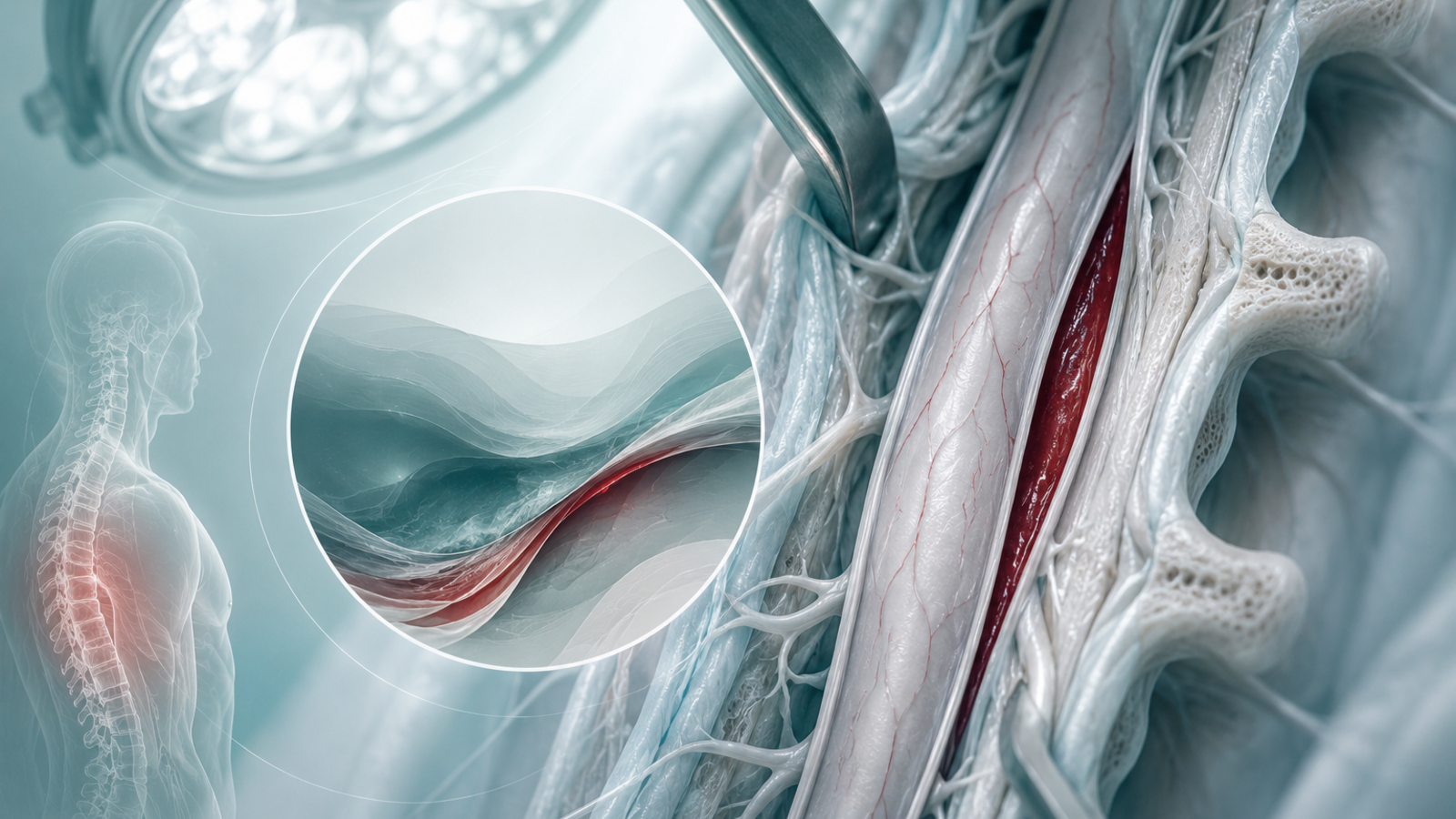
This paper reviewed four institutional cases of acute spontaneous spinal subdural haematoma and compared them with the literature. It is relevant because this rare condition can cause acute neurological deterioration and may require urgent surgical decisions.
Research snapshot
Article title: Risk Factor Analysis and Surgical Outcomes of Acute Spontaneous Spinal Subdural Hematoma. An Institutional Experience of Four Cases and Literature Review
Authors: Amisha Vastani, Asfand Baig Mirza, Jose Pedro Lavrador, et al., Gordan Grahovac
Publication type: Journal article
Publication date: 1 February 2021
Publication details: World Neurosurgery. 2021;146:e384-e397.
PMID: 33223130
PMCID:
DOI: 10.1016/j.wneu.2020.10.096
Study type: Case series and literature review
Mr Grahovac’s involvement: Listed author on the publication
Original publication: View the original publication on PubMed
What this paper looked at
This publication considered acute spontaneous spinal subdural haematoma, an uncommon bleeding condition around the spinal cord that can cause neurological deficit. It combined the authors' institutional experience of four cases with a review of published literature.
Key points from the publication
The ResearchGate and PubMed records confirm the title and publication connection to Mr Grahovac. The abstracted text describes the condition as rare and potentially associated with significant morbidity, with analysis of risk factors and surgical outcomes.
Clinical relevance
The paper is relevant to emergency diagnosis, imaging interpretation, surgical decision-making and counselling in a rare spinal bleeding condition.
What this means in context
Because the institutional series included only four cases, conclusions should be interpreted cautiously. Management depends on neurological status, location of haematoma, imaging, timing, bleeding risk and specialist judgement.
View published abstract
The following abstract is reproduced from the original publication and is provided for reference. It may include technical terminology intended for clinical or academic audiences.
Objective: Spontaneous spinal subdural hematoma (SSSDH) is exceedingly rare, with significant morbidity in most patients. Acute neurologic deficit in the context of a SSSDH is considered a neurosurgical emergency. We performed a literature review and compared the results with our institutional experience to evaluate the risk factors and neurologic outcomes of SSSDH.
Methods: We retrospectively collected the medical, radiologic, and surgical information of 4 patients with SSSDH who were operated on in our neurosurgical unit. A literature review of surgically managed patients with SSSDH and their neurologic outcomes was performed. Ordered logistic regression statistics were used to study the risk factors influencing the postoperative Domenicucci grade.
Results: A total of 112 patients were evaluated, with a female/male ratio of 1.3:1. Mean patient age was 60.25 years. Our analysis of the data showed that the cohort of patients presenting with bladder dysfunction in addition to paraparesis were found to have worse neurologic outcomes postoperatively. Adjusted analysis identified 3 clinical characteristics that influenced surgical outcome: cervical SSSDH (P = 0.029), neurologic deficit (P < 0.001), and anticoagulation medication (P < 0.001).
Conclusions: This review shows that patients aged ≥60 years and on anticoagulation are at an increased risk of sustaining a spontaneous subdural spinal hematoma without history of trauma. To our knowledge, this is also the first study to show a presenting symptom of bladder dysfunction as a significant risk factor for poor surgical outcome in SSSDH. Our study supports surgical evacuation of acute SSSDH in the presence of these risk factors.
Keywords: Acute; Risk factors; Spontaneous spinal subdural hematoma; Surgical outcomes.
View the original publication on PubMed
About Mr Gordan Grahovac
Mr Gordan Grahovac is a Consultant Neurosurgeon and Complex Spinal Surgeon with expertise in managing complex spinal and neurosurgical conditions.
His work includes the assessment and treatment of patients with degenerative spinal conditions, spinal cord compression, spinal tumours, complex spinal pathology and conditions requiring specialist neurosurgical input.
His approach focuses on careful diagnosis, appropriate treatment planning and helping patients understand their options clearly.
Important note
This page is for educational purposes only and should not be taken as individual medical advice.
If you or someone you know has symptoms such as worsening headache, confusion, drowsiness, weakness, changes in speech, seizures, balance problems or symptoms following a head injury, seek urgent medical advice.
